













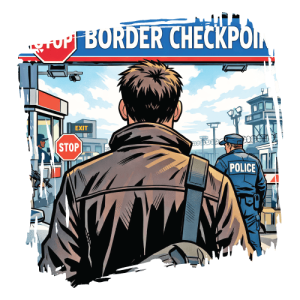
Countries that sign up to the UN Refugee Convention or Protocol are legally obliged and responsible for recognising refugees’ rights and ensuring the provision of fundamental human rights to those seeking refuge. This can help you feel more secure and confident in your rights and the support available, knowing that these principles are widely recognised.
Some international groups and organisations operate globally, with networks and reach across many territories and countries; many can not only provide short-term assistance but also offer long-term solutions such as relocation, housing, financial aid, and more. The priority is to identify the groups and organisations best suited to help and to provide the support you need now. The Refugee Crisis Tool was created to help you quickly and easily find these organisations.
CONTENTS
LOCATION
GENERAL CONSIDERATIONS
SUPPORT AND ASSISTANCE
ABOUT GAYTHER
MORE
SHARE
REFUGEE OR ASYLUM SEEKER
The country you are currently located in is generally considered a
And has the status is

- It is vital that, before you provide any personal information to anyone, especially details that could be used against you or reveal your LGBTQIA+ identity, you consider to whom you are speaking and how any information you provide will be used. Ensuring confidentiality can help you feel safe and protected, reducing fears about privacy breaches.
- You should never hand over or transfer any money or valuables to anyone to receive refugee or displacement support. You may be required to pay for official documents such as passports and visas, and for professional services such as lawyers and advisors within your own country; however, no charity or organisation offering support would likely require you to pay to receive their help.
- Refugees and those seeking asylum should be aware that they cannot face discrimination based on their method of entering a country to claim asylum, according to the refugee convention and protocol guidelines.
- Refugees can travel through several countries, including those considered safe third countries; however, you may be asked why you did not claim asylum there, but you should not face discrimination for not doing so.
- To seek asylum, you generally need to be physically present in the country to submit your claim. Depending on the urgency of your situation, organisations like UNHCR and Rainbow Railroad might be able to assist you in leaving your home country.
- If you claim and are granted asylum, you cannot later claim asylum in another country unless you can clearly show that your situation there would cause you to become a refugee again. For instance, if you leave your home country due to war and seek asylum in a neighbouring country, but then you face persecution because of your sexuality, you are now claiming asylum based on your sexual orientation rather than the original reason of war.
- Some grounds for claiming asylum are easier to demonstrate than others. Membership of a particular group is a broad ground that applies to LGBTQIA+ individuals facing persecution; however, it can be difficult to claim asylum in some countries using this ground successfully.
- Though the principles and fundamental rights are observed in many countries around the world, how they are interpreted and applied will vary from country to country.

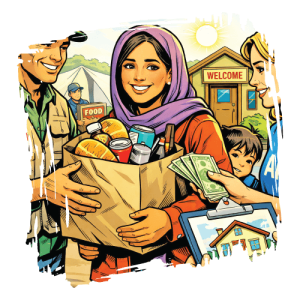
When arriving in a safe country that has signed the UN Refugee Convention and Protocol and claiming asylum, although how your claim will be processed may differ by country, the principles they adhere to include:
- Protection from Refoulement – the right not to be returned to a country where your life is at risk or where you might face persecution.
- Freedom of movement – you should not be limited and should be able to move freely within the country or territory.
- Right to work – the right and ability to seek employment without restriction or persecution.
- Financial support – assistance and access to social security, including welfare benefits, tax credits, and more.
- Right to an education – access to an elementary level of education without discrimination.
- Housing – access to public housing without discrimination.
- Identity documents – the right to request and receive, from the country granting asylum, identity papers and travel documents enabling them to move freely and travel.
- Family Reunification – the right to bring family members to the country that granted asylum
The process for claiming asylum can take months to years in some cases. Though the process can be lengthy, during the assessment stage, you may receive similar benefits, such as social welfare, healthcare, housing, and more.
To understand the refugee and asylum process, it is important first to look at what constitutes a safe country and other points to consider:
- A safe country is generally defined as one with a stable, democratic government, low levels of violent crime, and a strict rule of law, where residents are protected from persecution, torture, and indiscriminate violence. The country respects and upholds people’s fundamental human rights, provides reliable infrastructure and a framework, and adheres to international refugee protections.
- A refugee can travel through multiple countries, including safe countries, before making an asylum claim. There are no laws relating to a first safe country, as the UN Refugee Agency (UNHCR) clarifies that the 1951 Refugee Convention does not require refugees to claim asylum in the first safe country they reach. Even though international law does not strictly require claiming in the first safe country, national laws often restrict secondary and onward movements.
- Once a refugee claims asylum in a safe country, they are unlikely to be able to move to another safe country to make a new asylum claim. If you have an asylum application pending in the first country, you risk your new application being deemed inadmissible and returned to that country under safe third-country rules.
- Within the European Union, there is a territory database called Eurodac, which is part of the Dublin System. The Eurodac database is a centralised EU system that stores fingerprints, facial images, and other data for asylum seekers and irregular migrants to help EU countries identify who is responsible for examining an asylum claim. If you have your fingerprints taken in one EU member country, you can be sent back there to have your claim processed, even if you travel elsewhere.
- Some countries, such as Australia, may send refugees and asylum seekers to processing centres in other countries. At the same time, their cases are assessed, and then they are returned to the country upon being granted asylum.
- The rules governing refugees and asylum seekers may vary from country to country, and which countries are considered safe can change depending on their political and societal situations.

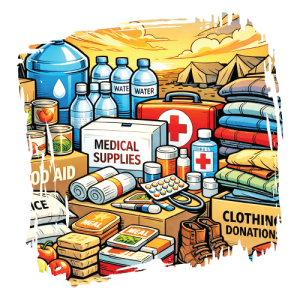
Individuals who can no longer live at home in their country, due to war, persecution or natural disaster. A situation in which returning would likely result in risk to their life or imprisonment. Countries at war, especially where there is nowhere safe in the country or a country that passes judgments passing lengthy prison time or worse, death sentences.
- Persecution can be anything from race, religion, gender, sexuality or how you choose to identify.
- Claiming asylum is not limited to risks associated with the state, country, or political party, but also to risks at the hands of non-state actors when the government is unable or unwilling to protect people from them, such as large gangs or militias. Meaning that the police or legal system is unable to stop the threat or is unwilling and ignores the ongoing persecution.
- For many, remaining at home or staying in your country would likely pose a risk to your life or your freedom, so the only solution is to flee.
- In countries that require visas to enter or leave, people may not be able to obtain the necessary visas, forcing them to exit the country and enter new countries illegally (without the required travel documents).
- Under the UN Refugee Convention and Protocol, refugees and asylum seekers cannot be discriminated against due to the means by which they entered a country, even illegally or via an irregular route, only if they present themselves to the authorities without delay and show good cause for their presence.
- Getting from your home country to a safe country can be a challenge, one that many refugees and asylum seekers become trapped in due to economic and legal restrictions. Traffickers and bad actors are known to prey on these vulnerable people, taking any money they have and putting them in dangerous situations.
- Unfortunately, it is not possible to claim asylum at a foreign country’s embassy or consulate, as asylum status is considered a territorial right, meaning you must be physically present in the country or at a port of entry to apply.
- Some countries may grant diplomatic asylum. Diplomatic asylum is mainly recognised in Latin America, where a person who believes they are in imminent danger seeks refuge in an embassy by requesting asylum. Though this form of temporary protection does occur, it is infrequent and only in certain parts of the world; for example, it is not recognised in the USA, the UK, Canada, or the European Union.
- Embassies and consulates, however, depending on the situation, might be able to offer humanitarian visas that permit you to travel and claim protection on arrival. There are legal routes handled by the UNHCR, which identify vulnerable refugees and help relocate them to safe countries.
- For those unable to leave their country, the UNHCR and Rainbow Railroad might be able to assist. Offering experience and logistical knowledge in helping refugees seek asylum in safe countries.

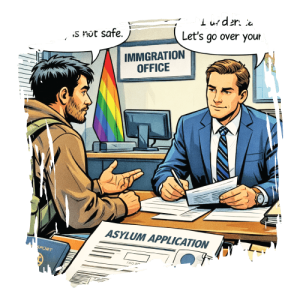
- You must review all safe countries to find one that suits your long-term needs. If you identify as LGBTQIA+, claiming asylum in a country that criminalises same-sex relationships or restricts gender identities would likely be unwise.
- It is also essential to establish the route you might take and which countries you will have to pass through. The Dublin system means that the first European Union (EU) country you pass through that registers your fingerprints or captures your image will likely be the one that processes your asylum case; however, some EU countries still face challenges, particularly regarding the LGBTQIA+ community.
- Upon arriving in a safe country, typically, you can approach a border guard or immigration officer at an airport or port and state that you wish to claim asylum. If you are already within the country, you may have to report to a reception centre or contact that country’s asylum handling team; however, rules and restrictions may apply, as some countries may impose a limit relating to the duration for which an asylum claim will be accepted (likely no more than 1 year from the date of arrival).
- Once you have claimed asylum, you will be required to provide your identity papers and any supporting evidence and documents relevant to your claim.
- You will typically undergo a screening interview, during which your biometric data may be collected, such as fingerprints and a photograph.
- After processing, you will typically undergo a substantive interview in which you must explain your fear of persecution and present any supporting evidence. Normally, you will have the right to an interpreter and legal representation.
- Once your asylum claim is being processed, you will typically be given some form of registration documents and taken to a processing centre that will assess your needs, such as the provision of accommodation, financial support, etc.
- While your application is being assessed, you will likely have to attend interviews, undergo assessments and answer any questions your case handler may have.


Gayther is one of the largest online collections of LGBTQIA+ community-related information, resources and services. Tools and guides that are designed to be fun and easy to use. Gayther offers a platform that provides positive content intended to inform, showcase, and connect the global community and its allies. Gayther Affinity is a private platform for the LGBTQIA+ community and their friends. A space that gives you the freedom to be yourself, helping you communicate with and connect to people similar to yourself from around the world and from all age groups and backgrounds.
Gayther cares and wants to help and support the global LGBTQIA+ community. We have built numerous refugee and migrant resources, tools and guides to help ensure people are not only informed about their rights, what constitutes a refugee and the right to asylum, but also directories and guides to help people in need find the exceptional organisations, international groups and charities with the knowledge, know-how and experience in supporting the wants and needs of refugees and migrants.
To help you learn more about refugee- and migrant-related themes, we have created a dedicated refugee explanations section. This area provides detailed explanations of some of the main topics that many refugees and migrants are likely to face. Click on a question to be directed to the explanation.



There are thousands of events taking place, it is not always easy to know what is going on and when, Gayther can help


Discover more about the extensive tools, services and guides available on Gayther. From country and regional guides to LGBTQIA+ community resources, learn more about all that Gayther has to offer












Many of the services and information provided include links to and from external third-party services (not Gayther). Gayther is a listing platform only; it is not an agent or middleman, and it does not endorse or validate any businesses, services, or events on our platform. You must carry out independent research before providing your information or transferring money. You must understand who you are talking to and how they will use any information you provide before stating any personal or sensitive details. In some countries, providing sensitive information might cause you problems. This page may contain external links to third-party websites; Gayther provides these links for your convenience and does not endorse, warrant or recommend any particular products or services. By clicking any external links, you will leave Gayther and be taken to a third-party website. You do so at your own risk, and by accessing the site, you will be required to comply with the third party’s terms and conditions of use and privacy policies.